

👇
She Bent Down and Touched Her Toes Like It Was Nothing
I watched her in the early morning light. Silence everywhere, a few cranes overhead, dew on the grass. She moved slowly-very deliberately—but with such ease I almost couldn’t believe what I was seeing.
She bent at the waist, reached down, and touched her toes. No wobble, no “oof”, no leaning on a tree or chair. Just clean, smooth motion. A full fold.
Here’s the thing: she was ninety-two years old.
I’ll never forget it. My knees clenched just thinking about trying the same move right then.
But that scene stuck with me, nagged me, haunted me even. Because I look in the mirror a lot these days and see stiffness, little aches, and soreness, as well as the morning “ouch” in my joints, I might be out of shape. But I don’t feel frail. And yet, I watch people decades younger struggle to tie their shoes.
How does she do it?
It’s Not What You Think – It’s Better
When I first heard versions of this story, I assumed there was some secret: a pill, a supplement, a high-cost therapy. But the more I dug, the more I realised the “secret” is something remarkably simple. And something many people ridicule… until it works.
In Japan, especially in rural and older communities, there is this quiet tradition of gentle bedtime movement routines. Five movements. Ten to fifteen minutes. That’s it.
No gym. No weights. No magical creams or injections. Just movement. At night. Right before bed.
What those movements do is trigger nocturnal joint recovery-a process where, while you sleep, your body repairs tissues, reduces inflammation, and promotes lubrication in joints. It’s not woo-woo; it’s biology doing its job when we give it the opening.
And here’s the kicker: one of the movements is so odd that when Western doctors first saw it, they laughed. But MRI scans tell a different story-cartilage regrowth, improved synovial fluid, better range of motion.
It’s like sneaking in a little repair cycle while your body is parked in neutral.
Why This Blew Me Away (And Should Blow You Away Too)
Because it means all those stories about “your joints are done by 40” are half-truths.
Because it says you can change how you feel tonight if you start tonight.
Because it gives hope to people who thought their only route was surgery or expensive treatments.
Here’s what really hit me as I read through studies and testimonies:
- Most people in their 50s and 60s grimace to grab their socks or tie their shoes-and accept it as inevitable.
- Meanwhile, a sizable portion of Japanese elders over 80 are performing full squats, sitting on the floor, and rising to their feet, walking long distances, and living “normal” lives.
- The difference? Habit, routine, and movement (not perfection). The body is still plastic. It still responds.
- Indeed, MRI evidence suggests that these routines can stimulate cartilage repair and regenerate joint tissue when combined with proper recovery cycles.
The Hidden Science: Sleep + Movement = Joint Repair
1. Deep sleep is your repair zone.
During non-REM slow wave sleep, your pituitary gland releases growth hormone, which boosts collagen production (essential for cartilage, ligaments, tendons).
2. Reduced inflammation during sleep.
Poor sleep triggers inflammatory pathways. Good rest calms them down.
3. Pain sensitivity is modulated.
You reset pain thresholds during sleep. Better sleep = less perceived pain.
4. Movement primes the joint.
Stretching signals to the body: “This part needs repair.” Synovial fluid flows more freely.
5. Recovery is cumulative.
Night after night, these small changes stack up. The body adapts.
The 5 Movements: Your Nightly Mini Ritual
Movement Purpose: How to Do It
Supine Bridge Stretch: Gentle hip extension. Lie on your back, knees bent, feet flat. Press into your heels and lift your hips slowly. Hold, lower.
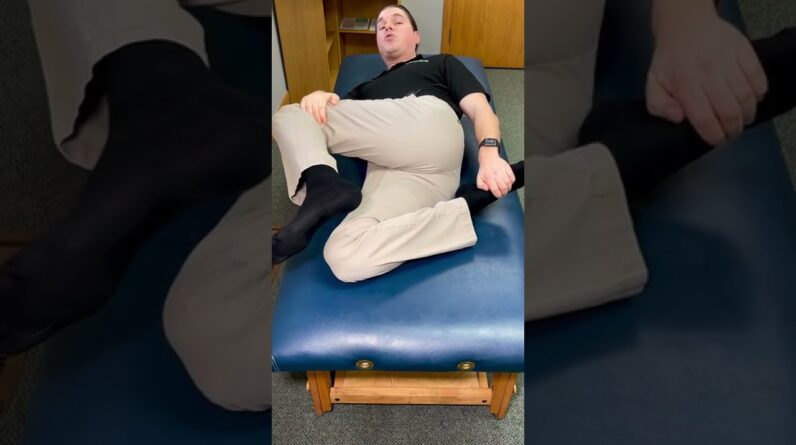
Passive Knee Hug Loosen hips, glutes. Hug one knee to the chest while lying down. Hold, switch.
Seated Forward Fold Hamstrings, lower back. Sit with legs out, reach forward gently. Let gravity help.
Ankle Circles Stimulate joint fluid Lift feet, rotate ankles in both directions.
Quad Activation Knee support Sit with one leg extended, press the knee to the floor. Contract thigh.
Tips: Go slow. Don’t force. Do it before bed. Breathe deep.
What You Might Notice After 4 Weeks
- Less morning stiffness
- Better reach, bend, squat
- Reduced “pop” or “grind” feeling in joints
- Deeper, more restful sleep
- Confidence to move again
In 3 months, you’ll move differently. In 6 months, you’ll feel like you’ve turned back the clock. In a year, you might be the one surprising people with your flexibility. The only requirement is showing up to your bedroom floor every single night and giving your body these 12 minutes of attention it desperately needs.
Now, we want to hear from you.
What’s the one daily movement that’s become harder for you over the years? Is it getting up from the floor, reaching behind your back, or something as simple as looking over your shoulder while driving? Which of these movements are you excited to try tonight? Please share your experiences and opinions with us in the comments below. We love to hear them.
Thanks for watching… Read More: The 92% Rule: Automate, Elevate, Repeat.
FAQs What if I’m unable to do some of the moves?
Modify or skip. The point is progress, not perfection.
How soon will I notice a change?
Many feel different in week one. Major changes come in weeks 3–4.
Can I do them in bed?
Some, yes. But a yoga mat on the floor gives better support.
Do I need gear?
Nope. Maybe a cushion or towel. That’s it.
Can I keep doing this long-term?
Absolutely. This is a long game. Your body will thank you.
One Final Word
This isn’t about becoming a yoga master or doing splits at 90.
It’s about reclaiming ease, grace, and the ability to move through life without that constant friction.
It’s about hope.
And it’s yours, starting tonight.
If you want the full breakdown with video walkthroughs, I’ve got 5 free videos that cover each move step-by-step.
They’re beginner-friendly, take no equipment, and can change how you feel in a matter of days.
Yell “SMOOTH” and I’ll send you the link.
You might not be able to touch your toes tomorrow…
But you’ll be on your way to bending time backwards.