

Senior Floating Spine Alignment Restores Poise
⭐ UNDERSTANDING THE SPINE THROUGH THE “FLOATING BONES” PRINCIPLE
Why Senior Floating Spine Alignment Matters
Daily Steps for Senior Floating Spine Alignment
A Comprehensive Explanation of How Your Spine Really Works – Dennis Bartram Style
The Spine Isn’t What People Think It Is. However, most people picture the human spine as something rigid, stiff, and stacked like a tower of bricks.
They imagine the consequence: the body shifts more pressure to the bone sitting directly on top of the next, all of them held up vertically like a pole.
It’s a natural assumption, but it is completely wrong.
In fact, thinking of the spine this way makes it harder to understand why people lose Balance, develop stiffness, or experience pain.
The truth is far more interesting.
Far more elegant.
And far more useful for anybody wanting to move well into their seventies, eighties, and beyond.
The spine is not a stack of blocks.
It is a system of floating bones, each one carefully suspended in tension by muscles, fascia, ligaments, and collagen fibres.
The bones don’t hold you up.
The tension does.
Once you understand this, everything begins to make sense: why the neck locks, why the low back gets overloaded, why habits reshape posture, and how ease of movement can return simply by rebalancing the system.
Tensegrity: The Real Secret Behind Upright Human Posture
Why Senior Floating Spine Alignment Improves Everyday Movement
“Bio” means life.
“Tensegrity” means structural integrity through tension.
A tensegrity structure doesn’t rely on rigid stacking.
It relies on floating, suspended bones held in place by a web of tension.
Think of the rods in a tensegrity sculpture.
They don’t touch, yet the whole structure stands tall.
Your spine works the same way.
Collagen-filled ligaments prevent extreme motion.
Fascia distributes load like a 3D body-wide suspension system.
Muscles contract and release to fine-tune micro-movements.
Discs act as spacers and force distributors.
When all this is balanced, the spine behaves like a resilient, flexible spring, more like a bow or a fishing rod than a pole. It absorbs force. It adapts instantly. It recovers naturally.
But if the tension becomes uneven?
The entire system shifts, distorts, and compensates.
Posture doesn’t collapse because the bones weaken.
It collapses because the tension system loses Balance.
Why “The Needle Tower” Is the Perfect Spine Analogy
If you’ve ever seen Kenneth Snelson’s Needle Tower sculpture, thin rods suspended by wires, you’ll understand immediately why tensegrity matters. The sculpture looks fragile, yet it stands tall, firm, and astonishingly stable.
Its strength comes not from the rods,
but from the balanced tension between them.
The human spine is the same.
When everything is in harmony:
- The vertebrae “float”
- movement feels light
- The body springs back into Balance.
- The spine can carry far more load than expected.
But when the tension system becomes imbalanced, through years of sitting crooked, leaning to one side, repeating a single movement pattern, or simply ageing, the structure begins to distort. And because the body is brilliant at coping, it adapts… until it finally cannot.
Pain is rarely the first problem.
It’s the last senior floating spine alignment signal in a long chain of compensations.
How the Spine Lets You Walk Upright Against Gravity
How Senior Floating Spine Alignment Reduces Habitual Tension
Consider the challenge your body faces every day: you walk upright against gravity, with a long column of bones balancing on top of each other. Other animals have four limbs on the ground or shorter spinal columns, making them far easier to stabilise.
But you?
You walk around like a vertical skyscraper.
Your spine manages this through three remarkable abilities:
- Stability, resisting collapse without stiffness.
- Mobility, allowing movement without losing alignment.
- Adaptability, adjusting instantly to uneven surfaces, sudden changes, or internal shifts.
Each vertebra connects to its neighbours through small joints that allow gliding, rotation, and sliding. Ligaments prevent dangerous extremes. Deep spinal muscles stabilise. Larger movement muscles guide. Fascia wraps the entire structure in one interconnected sheet.
This combination makes you both strong and flexible, a living tensegrity tower capable of movement in every direction.
But it also means that when the system becomes unbalanced, problems travel quickly. A stiff neck affects the ribs. A tight pelvis affects the lower back. A locked foot affects everything above.
No such thing as an isolated spine problem.
Only whole-body tension patterns express themselves in different ways.
Why Muscle Imbalance Amplifies Load on the Spine
The Role of Gravity in Senior Floating Spine Alignment
Here’s a secret most people, including many professionals, never learn:
External forces are amplified by internal tension.
If your spine is already out of Balance, your muscles work harder to stabilise you. That contraction multiplies the load placed on the vertebrae and discs.
This is why:
- The back “locks up” suddenly.
- People strain themselves lifting something light.
- A small twist can cause sharp pain.
- Sitting too long creates stiffness.
- Walking unevenly irritates the lower back.
The problem isn’t weakness.
It’s muscles over-engaging to compensate for an imbalance.
Imagine tightening one wire in the Needle Tower sculpture too much.
The entire structure shifts.
Load moves into the wrong places.
Movement becomes restricted.
Your spine behaves the same way.
The Spine’s Regions, Each With a Distinct Role
How Senior Floating Spine Alignment Supports Better Balance
Your spine isn’t one long bone. It is a collection of specialised regions:
7 cervical vertebrae (neck)
Provide rotation, flexion, and the ability to orient your head, the command centre of Balance.
12 thoracic vertebrae (mid-back)
Anchor the ribs, create stability, and allow controlled rotation.
5 lumbar vertebrae (low back)
Carry most of the body’s weight, absorb shock, and transmit power through walking.
5 fused sacral vertebrae (sacrum)
It acts as the keystone of the entire structure, connecting the spine to the pelvis and legs.
Every region influences the others.
If one part stiffens, another overworks.
If one part weakens, another compensates.
If one part shifts, the overall balance changes.
This is why chronic low-back pain often begins with old ankle injuries or long-term hip stiffness, and tension travels.
Ageing and the Natural Shift in Load Distribution
Daily Habits That Affect Senior Floating Spine Alignment
In youth, the front of the spine, the vertebral bodies and discs, takes most of the load. This is ideal because those structures are designed to absorb shock.
But as we age:
- discs lose hydration
- vertebrae lose internal support struts (trabeculae)
- joints begin to stiffen
- muscles react by protecting areas that feel unstable
Gradually, more load shifts toward the facet joints at the back.
These are small synovial joints, and like knees or hips, they can become irritated if overloaded.
This is why many older adults experience:
- morning stiffness
- soreness after sitting
- difficulty straightening up
- pain when twisting
- tightness that “moves around”
None of this is random.
It’s the predictable result of changes in the tension system.
But predictable also means modifiable.
The Intervertebral Disc: Brilliant, Vulnerable, and Misunderstood
The Head–Pelvis–Foot Link in Senior Floating Spine Alignment
Each disc is a marvel of natural engineering:
- a tough outer ring
- a gel-like centre
- the ability to shift pressure evenly
- the flexibility to allow movement
Discs don’t “slip.”
They deform to distribute load, exactly as designed.
But if the surrounding tension system is imbalanced:
- discs bulge
- discs compress
- discs dehydrate
- discs wear unevenly
Again:
The disc is not the senior floating spine alignment enemy.
It is the victim of poor mechanics created by habitual tension patterns.
Restore Balance, and discs experience far less strain.
Why Active Balance Is the Reset Button for the Spine
How Senior Floating Spine Alignment Helps With Pain Reduction
For decades, I’ve taught that movement is not about strength or flexibility.
It’s about Balance in the tension system.
Every habit- how you sit, stand, sleep, walk, lean, drive, or even think- shapes your nervous system. Over time, these patterns become automatic. They become “normal,” even if they are anything but.
Active Balance senior floating spine alignment interrupts those patterns.
It teaches the nervous system:
- How to recognise imbalance
- How to soften unnecessary tension
- How to restore alignment
- How to move with economy rather than effort
When Balance returns:
- Movement becomes easier
- Breathing becomes deeper
- Joints move freely
- Pain reduces naturally
This is not a theory.
You can see it in anyone who practices it consistently.
The body wants to move well.
It simply needs the right input to remember how.
Putting It All Together:
The Spine Is a Floating Tension System, Not a Rigid Column
The spine is not the problem.
Your age is not the problem.
Your flexibility is not the problem.
The problem, and the solution, lies in the Balance of the tension system around your spine.
Understand this, and you begin to understand senior floating spine alignment:
- Why does your posture change
- Why stiffness appears
- Why pain travels
- Why does Balance become harder?
- Why certain movements feel “blocked”
- Why do some days feel worse than others?
And you also understand why improvements can happen quickly when the system is brought back into Balance.
Floating bones.
Balanced tension.
Active awareness.
Natural movement.
This is the essence of proper senior floating spine alignment and spine health.
The Head-Pelvis-Foot Relationship: The Hidden Driver of Balance
Simple Ways to Practice Senior Floating Spine Alignment Today
If you want to understand the spine, you cannot ignore the relationship between the head, the pelvis, and the feet. These three areas form the major “triad” through which the whole body balances itself. They decide how force travels, how the spine aligns, and how your nervous system organises posture.
Think of your head as the steering wheel,
Your pelvis is the engine mount,
and your feet as the suspension system.
If any one of these is out of position,
The spine must compensate.
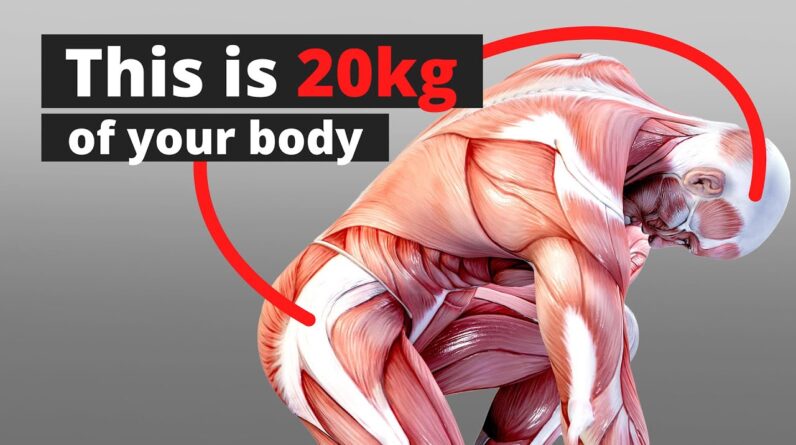
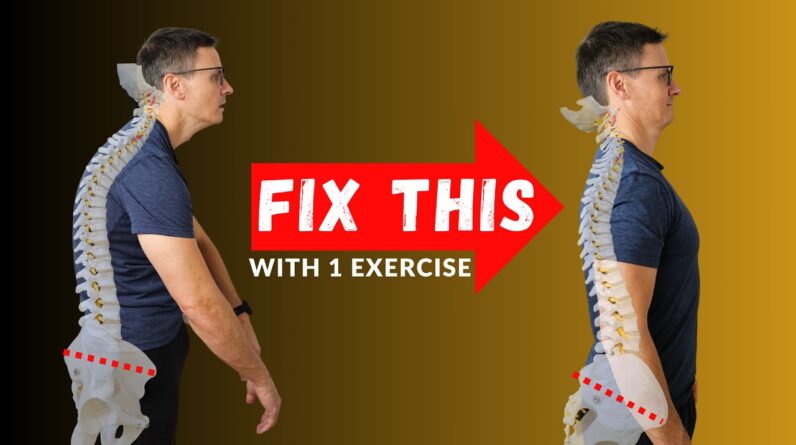
When the head sits slightly forward, the neck muscles tighten. This tension cascades down into the upper back, stiffens the ribs, limits breathing, and eventually lands in the low back. A slight drift in head position can trigger a full-body chain reaction.
When the pelvis tilts forward, backwards, or sideways, the spine twists to stay upright. The ribs rotate. The shoulders compensate. One hip tightens while the other side overstretches. This imbalance becomes your new “normal,” even though it quietly drains energy every day.
And when stiff shoes, an uneven gait, old injuries, or simply a lack of awareness dull your feet’s responsiveness, your body loses its connection to the ground. Without proper feedback, the spine overworks to stabilise you.
This is why many people say, “I don’t know where my balance went.”
Balance didn’t disappear.
Patterns in the triad overwrote it.
Habit Loops: How the Body Learns the Wrong Things Without You Noticing
Your nervous system is always learning.
It doesn’t stop at age 30, or 60, or 90.
It learns whatever you repeat.
And that includes:
- sitting crooked
- favouring one leg
- tilting the head while reading
- slumping over the phone
- clenching the jaw
- twisting during driving
- tightening shoulders during stress
Repeat a movement often enough, and the body saves it as a preset, even if it isn’t helpful. The spine reorganises itself around these patterns through a process called neuroplastic adaptation.
This is why an imbalance you developed at age 45 can still affect your posture at 75.
The body doesn’t forget.
It remembers too well.
But it can also unlearn.
And that is where Active Balance senior floating spine alignment comes in.
Gravity: Your Constant Companion or Your Constant Opponent
Gravity never takes a day off.
It pulls you downward 24 hours a day, even while sleeping.
Most people fight gravity unknowingly. They brace against it. They stiffen. They hold tension as though lifting an invisible weight.
When balanced, the spine doesn’t resist gravity.
It is using gravity.
A balanced spine lets gravity pass through it cleanly, like water flowing down a riverbed. The force is absorbed, redirected, and released, without strain. This is why young children move effortlessly. They haven’t yet built the tension habits that adults collect over decades.
When gravity passes cleanly through the spine:
- The head floats
- The bones feel light.
- The joints decompress
- The breath deepens
- Movements feel smooth
But when gravity is resisted:
- The muscles overwork
- The spine compresses
- The ribs stiffen
- Breathing becomes shallow
- balance fades
Active Balance senior floating spine alignment helps the body return to a state where gravity becomes a partner, not an enemy.
Why Most Stretching Fails (and What to Do Instead)
People often try to “stretch away” tightness.
But stretching rarely works long-term because it treats tension as a local problem when it’s actually part of a global system.
If the spine is out of Balance, stretching one area can cause another to tighten in compensation.
You stretch the hamstrings,
and the lower back tightens.
You stretch the shoulders,
and the neck takes over.
You stretch the chest,
and the ribs clamp down.
It becomes a game of tension whack-a-mole.
Active Balance does not stretch individual muscles.
It reorganises the whole tension system.
When the head–pelvis–foot triad aligns,
The spine decompresses naturally.
And many areas that felt “tight” suddenly soften without being stretched.
The body was never designed to be pulled apart.
It was designed to be balanced.
Why Pain Isn’t the Problem, It’s a Message
Pain is rarely the first sign of something wrong.
It is the last resort, the nervous system ringing an alarm because all other signals were ignored or unnoticed.
Before pain arrives, the body whispers:
- a slight shift in posture
- a bit more stiffness in the morning
- a small loss of Balance
- a subtle change in walking
- shallow breathing
- tight ribs
- fatigue after minimal activity
Most people don’t recognise these as signals.
They adapt.
But adaptation is not correction.
It is coping.
Therefore, Active Balance helps you hear those early signals again, so correction happens before pain becomes necessary.
How Quickly Can the Spine Improve? Faster Than Most People Think
One of the biggest surprises for senior floating spine alignment students is how quickly their body responds once the tension system is addressed. It’s common to see:
- lighter walking
- improved Balance
- deeper breathing
- reduced stiffness
- clearer head movement
- less pressure in the lower back
Within a single session.
Why so fast?
Because the nervous system changes instantly when it gets the right information.
The spine is not “stuck.”
It is simply holding on to a pattern.
Please give it a better pattern.
And it updates immediately.
This is why Active Balance is such a powerful tool for seniors.
Age does not prevent improvement.
Imbalance does.
A senior’s floating spine alignment imbalance can be changed at any age.
Open to See This Video, And This Is What’s Already Built,
Trained & Waiting For Your First Command.
How This Ties Together: Floating Bones, Balanced Tension, Natural Movement
Let’s bring everything together:
- Your spine is a floating system, not a stacked column.
- Tension, not bones, determines posture.
- The head, pelvis, and feet constantly negotiate balance.
- Habits shape tension patterns over decades.
- Gravity amplifies imbalance unless movement is organised.
- Muscles tighten to compensate for poor alignment, not because they are “tight” by nature.
- Pain is information, not failure.
- Balance can return at any age with the right inputs.
When you understand these principles, the spine stops being a mystery.
It becomes a conversation, one you can influence with awareness and gentle guidance.
And it is the foundation of what truly helps people move well, stay upright, and feel younger in their bodies again.