


Simple Natural Body Alignment Therapy You Can Practice Daily
Rediscovering Your Natural Alignment: How Active Balance Lets Your Body Heal Itself
 You’ve probably tried massage, chiropractic, physiotherapy, and even yoga, promising relief, improved posture, and increased strength. Yet many of us still wake up stiff, ache after sitting too long, and feel dragged down by tension we can’t quite shift.
What if the issue isn’t what you do, but what you’ve forgotten? What if your body’s natural alignment, its innate flow of movement, has lost its map?
For over 50 years, Dennis Bartram has been teaching people to re-find that map. Active Balance isn’t a quick fix; it’s a re-awakening of structure, sensation, and flow. In this post, you’ll see:
- What makes Active Balance different
- Why alignment matters far beyond posture
- What your body is “telling you” via tension & discomfort
- How sessions & self-practice unlock lasting freedom
- A simple daily alignment ritual you can start tonight
1) What Makes Active Balance Different
You don’t often hear this: many therapies work on symptoms. Active Balance works on the blueprint.
- Ancient roots + modern science. Inspired by Japanese natural-movement medicine, which dates back 2,000 years, Amatsu draws on martial arts, Eastern methods, and traditional healing, and is grounded in modern anatomy, physiology, and fascia science. Learn more about the lineage.
- Non-forceful, non-invasive corrections. Instead of cracking or pushing, practitioners use gentle mobilisations, positional release, tissue re-patterning, and cranial balancing to work with your body’s intelligence.
- Whole-body awareness. The focus isn’t just on the spot of pain. We consider how you carry strain through your shoulders, hips, spine, breath, fascia, and neurological feedback. Compensation in one area often hides in another.
- Lineage and depth Dennis’s teaching honours direct transmission from the ancient Tatara school, refined across decades of clinical practice and instruction.
2) Natural Body Alignment Therapy: Why Alignment Matters Far Beyond Appearance
Posture isn’t vanity. Posture is healthy language. How you stand, breathe, and move reveals where your structure is locked and where your nervous system is braced. Misalignment can influence:
- Nerve irritation & pain, Compression and stretch on nerves (sciatica, neck pain, headaches).
- Joint wear & tear —> Poor load distribution accelerates degeneration.
- Reduced breathing & energy —> A dropped chest, locked ribs, or forward head reduces lung capacity and vitality.
- Stress & emotional holding —> The body records tension; physical misalignment often mirrors emotional bracing.
Active Balance doesn’t simply “straighten.” It re-teaches your body to carry itself with ease—reducing compensations, pain, and fatigue while restoring energy.
3) What Your Body Is “Telling You” Via Tension & Discomfort
Pain is a signal, not the problem. Here are common signals people ignore and what they often mean in Amatsu work:
| Symptom | What Your Body Might Be Saying |
|---|---|
| Tight shoulders & neck | Head drifted forward; the upper cervical junction overloaded, and guarding. |
| Low back pain after sitting | Pelvis tilt and hip tension pulling on lumbar tissues; fascia lines under strain. |
| Chronic fatigue, shallow breathing | Rib cage rigidity; limited thoracic mobility restricting diaphragm and oxygen uptake. |
| Knee, ankle, or foot pain | Compensating for imbalances in the pelvis/hips/spine feet, taking jobs they weren’t designed to carry alone. |
| Feeling “stuck” when stretching | Fascia and ligaments holding old strain; the nervous system “braking” the range to feel safe. |
The skill is to listen to track how movement feels everywhere, not just where it hurts.
4) How Sessions & Self-Practice Unlock Lasting Freedom
Inside an Active Balance Session
- Whole-body assessment: Observation of stance, gait, breath, and micro-movement. Subtle asymmetries and fascial pulls become visible.
- Gentle neurological feedback, Light testing, and contact reveal where the body “locks” or “releases,” guiding precise interventions.
- Non-forceful corrections, Mobilisations, cranial balancing, kyushu (key point) release, and movement re-patterning invite the body to reorganise itself.
- Integration coaching, Simple movement cues, and breath strategies help you carry session benefits into daily life.
Self-Practice That Makes Results Stick
- Micro-resets during the day, 30 60 seconds of breath + alignment, can prevent hours of tension.
- Awareness while you work. Keyboard height, screen level, seat angle, and foot contact affect your entire chain.
- Kyushu self-release. Gentle fingertip work on key points around the shoulders, neck base, and hips can unlock distant restrictions.
- Walk in alignment. Feet grounded, pelvis buoyant, head “floating.” Small cues, big changes.
5) A Daily Alignment Ritual You Can Start Tonight (10 Minutes)
Do this in the evening (or twice daily) for a cumulative effect. The goal is to let your body recognise ease again.
| Step | What to Do | Purpose / Sensation to Notice |
|---|---|---|
| 1. Breath Reset (2 mins) | Lie on your back, knees bent, feet flat. One hand on the belly, one on the chest. Inhale through the nose, allowing the belly to expand, then the chest. Exhale 4. Repeat. | Unlock rib-cage rigidity; restore diaphragm motion. Notice ribs soften and chest lift lightly. |
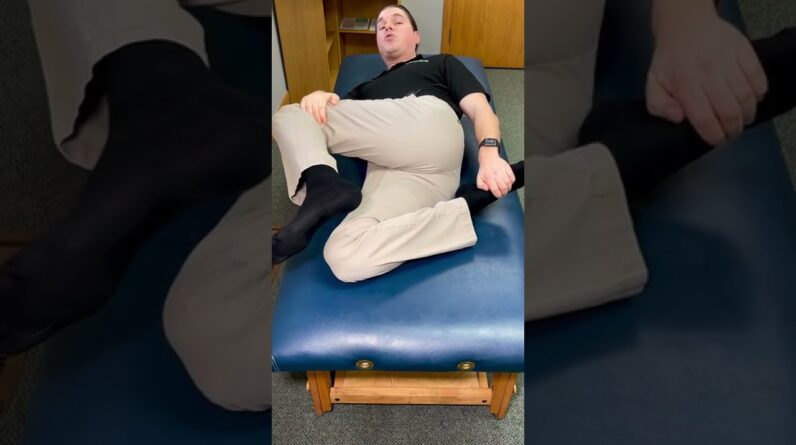
| 2. Pelvis & Hip Release (2 mins) | Supine, knees bent. Drop knees to one side (shoulders down), hold, then to the other side. Draw knees to chest and gently rock. | Re-centres pelvis; eases lumbar and hip tension. |
| 3. Kyushu Point Release (2 mins) | Using your fingertips, explore tender points at the front of the shoulders, the base of the neck, and the top of the hips. Gentle pressure/circles until the tissue softens. | Releases “hub” points where strain collects; effects often travel along fascial lines. |
| 4. Postural Imprint Standing (2 mins) | Back to a wall: heels a few inches forward; sacrum, shoulder blades, and back of head lightly touch. Step away, keep the feeling. | Gives your nervous system a clear reference for stacked alignment. |
| 5. Gentle Movement Flow (2 mins) | Slow pelvic tilts, small spinal waves, shoulder rolls, lengthen up, soft twists. Keep motion small and fluid. | Integrates alignment with movement; teaches fascia to glide without bracing. |
Advanced Tips: Speeding Up the Transformation
- “Switching” checks Quick neurological resets can unmask true range and stability, making every stretch and drill more effective.
- Biotensegrity awareness: Sense the whole-system balance of tension/compression. Coordinate posture in three dimensions, not just front-back.
- Breath + micro-movement Small adjustments paired with focused exhalation unlock stubborn joints faster than big stretches.
- Track progress. Monthly photos or short videos (front/side) reveal subtle but meaningful changes you might otherwise miss.
-
Ancient principles, modern application, refined by decades of hands-on practice. Natural Body Alignment Therapy: What If Your Body Feels Free Again?
Imagine waking up, bending, turning, and walking without that familiar drag of tension. What if stiffness, joint ache, and fatigue weren’t “just getting older,” but signals that your body is asking to return to its natural design?
Active Balance offers more than symptom relief; it offers a pathway to remember your original blueprint. With Dennis’s decades of practice and teaching, you don’t have to experiment in the dark. You have a guide, a map, and a method.
Start with the Evening Alignment Ritual tonight. Notice the breath. Notice the softening. Notice how your body wants to move.
6) The Deeper Story: Ancient Lineage Meets Modern Science
Active Balance didn’t appear overnight. Its origins trace back over two thousand years, rooted in the martial and healing traditions of Japan’s Tatara lineage. For centuries, these methods were guarded and passed through oral transmission, preserved by masters who understood that the same movements that protect life in combat can also restore life in healing.
When Dennis Bartram brought Active Balance to the West, he carried this transmission forward not as folklore, but as a living, breathing method. What makes it unique is the fusion:
-
Martial roots: Movements designed for efficiency and survival also teach the nervous system economy of effort. Healing flows from the same principle.
-
Tactile wisdom: The old masters trained hands to “read” structure, sensing fascia tensions and micro-shifts invisible to the eye.
-
Scientific validation: Modern fascia research, tensegrity models, and neurological studies now confirm what Active Balance has practised for centuries.
When you step into an Active Balance session, you’re not just receiving treatment; you’re also engaging in a profound experience. You’re plugging into a lineage that understands movement as medicine, and medicine as movement. That depth is why results often feel profound even after one gentle session.
7) Fascia: The Hidden Web You’ve Been Ignoring
One of the biggest breakthroughs in body science over the past 30 years is fascia awareness. Fascia is the connective tissue web that wraps around every muscle, nerve, bone, and organ. Think of it as your body’s internal fabric. If fascia is restricted, everything suffers.
Why is this important?
-
Restrictions travel —> a twist in the ankle fascia can echo up through the knee, hip, and spine.
-
It’s a sensory organ —> fascia is packed with nerve endings; stiffness here can amplify pain signals.
-
It stores trauma and emotion —> old injuries, falls, or even emotional shocks can “freeze” into the fascia, holding you in protective patterns long after the danger has passed.
Active Balance is fascia-first. Gently releasing restrictions and teaching your fascia to glide again remaps your whole system. That’s why clients often report feeling lighter, taller, freer, not just in the painful spot, but everywhere.
8) How Alignment Affects Everyday Life
Alignment isn’t just about pain relief. It’s about quality of life. Imagine these everyday moments with alignment restored:
-
At the desk, instead of slumping, you sit with natural poise, shoulders free, breath flowing. Energy lasts longer, and concentration sharpens.
-
Walking the dog, no more hip drag or knee strain; your gait feels rhythmic, springy, alive.
-
Climbing stairs, legs feel powerful and coordinated instead of heavy or unstable.
-
Sleeping with better alignment, tissues stop screaming at night; rest becomes restorative, not restless.
-
Emotional resilience, when the body isn’t constantly in bracing mode, the nervous system downshifts from fight-or-flight into calm clarity.
Alignment leaks into everything. It’s not a luxury. It’s the foundation for how you live, move, and feel every single day.
9) Natural Body Alignment Therapy: Small Shifts That Compound Over Time
People often underestimate the power of tiny, repeated changes. With Active Balance principles, you don’t need hour-long routines or painful stretches. Instead, you use micro-adjustments:
-
One breath reset before each meal, it clears tension from the ribs and diaphragm.
-
Standing tall before phone calls re-primes posture and presence.
-
Gentle pelvic tilts every hour at a desk help keep the hips and spine unlocked.
-
Rolling feet on a soft ball in the evening signals fascia throughout the body to soften.
Each of these natural body alignment therapies takes less than a minute. Do them consistently, and over time, your nervous system begins to choose alignment automatically. That’s when lasting change happens without forcing, without fighting.
10) The Bigger Picture: Ageing Without Limits
We’re often told stiffness and pain are the price of ageing. But what if that’s just conditioning? What if it’s not age, but adaptation failure?
When you train your nervous system and fascia to stay adaptable, your body doesn’t lock up over the decades. Instead, it retains a quality we rarely see in the West: youthful flow.
Consider martial artists in their seventies who still move with the agility of cats, or dancers who glide effortlessly into their eighties. Their secret isn’t luck. It’s alignment.
Active Balance provides you with the same path. Whether you’re 40 or 80, your body can still be taught to release, reorganise, and thrive. The blueprint is always there — waiting for you to use it.
 Natural Body Alignment Therapy Takeaway
Natural body alignment therapy isn’t a “treatment.” It’s a lifestyle shift. With Active Balance, you don’t just chase relief, you reclaim vitality, presence, and freedom for the long game of life.
Ready to Experience Active Balance for Yourself?
Book a personal alignment session with Dennis Bartram and feel the difference of non-forceful, whole-body correction guided by lineage and experience.
Prefer to learn at home? Explore our training and resources to begin restoring your natural alignment today.
Explore more:
Active Balance history •
Spine alignment insights
-
Natural Body Alignment Therapy: What If Your Body Feels Free Again?
Imagine waking up, bending, turning, and walking without that familiar drag of tension. What if stiffness, joint ache, and fatigue weren’t “just getting older,” but signals that your body is asking to return to its natural design?
Active Balance offers more than symptom relief; it offers a pathway to remember your original blueprint. With Dennis’s decades of practice and teaching, you don’t have to experiment in the dark. You have a guide, a map, and a method.
Start with the Evening Alignment Ritual tonight. Notice the breath. Notice the softening. Notice how your body wants to move.
6) The Deeper Natural Body Alignment Therapy Story: Ancient Lineage Meets Modern Science
Active Balance Natural body alignment therapy didn’t appear overnight. Its origins trace back over two thousand years, rooted in the martial and healing traditions of Japan’s Tatara lineage. For centuries, these methods were guarded and passed through oral transmission, preserved by masters who understood that the same movements that protect life in combat can also restore life in healing.
When Dennis Bartram brought Active Balance to the West, he carried this transmission forward not as folklore, but as a living, breathing method. What makes it unique is the fusion:
-
Martial roots: Movements designed for efficiency and survival also teach the nervous system economy of effort. Healing flows from the same principle.
-
Tactile wisdom: The old masters trained hands to “read” structure, sensing fascia tensions and micro-shifts invisible to the eye.
-
Scientific validation: Modern fascia research, tensegrity models, and neurological studies now confirm what Amatsu has practised for centuries.
When you step into a natural body alignment therapy session, you’re not just receiving treatment. You’re plugging into a lineage that understands movement as medicine, and medicine as movement. That depth is why results often feel profound even after one gentle session.
7) Fascia: The Hidden Web You’ve Been Ignoring
One of the biggest breakthroughs in body natural body alignment therapy science over the past 30 years is fascia awareness. Fascia is the connective tissue web that wraps around every muscle, nerve, bone, and organ. Think of it as your body’s internal fabric. If fascia is restricted, everything suffers.
Why is this natural body alignment therapy important?
-
Restrictions in travel, a twist in the ankle fascia, can echo up through the knee, hip, and spine.
-
It’s a sensory organ, the fascia of which is packed with nerve endings; stiffness here can amplify pain signals.
-
It stores trauma and emotion, old injuries, falls, or even emotional shocks can “freeze” into the fascia, holding you in protective patterns long after the danger has passed.
Natural body alignment therapy is fascia-first. Gently releasing restrictions and teaching your fascia to glide again remaps your whole system. That’s why clients often report feeling lighter, taller, freer, not just in the painful spot, but everywhere.
8) How Alignment Affects Everyday Life: Natural Body Alignment Therapy
Alignment isn’t just about pain relief. It’s about quality of life. Imagine these everyday moments with alignment restored:
-
At the desk, instead of slumping, you sit with natural poise, shoulders free, breath flowing. Energy lasts longer, and concentration sharpens.
-
Walking the dog, no more hip drag or knee strain; your gait feels rhythmic, springy, alive.
-
Climbing stairs, legs feel powerful and coordinated instead of heavy or unstable.
-
Sleeping with better alignment, tissues stop screaming at night; rest becomes restorative, not restless.
-
Emotional resilience, when the body isn’t constantly in bracing mode, the nervous system downshifts from fight-or-flight into calm clarity.
Natural body alignment therapy. Alignment leaks into everything. It’s not a luxury. It’s the foundation for how you live, move, and feel every single day.
9) Small Shifts That Compound Over Time
People often underestimate the power of tiny, repeated changes. With Amatsu principles, you don’t need hour-long routines or painful stretches. Instead, you use micro-adjustments:
-
One breath reset before each meal clears tension from the ribs and diaphragm.
-
Standing tall before phone calls re-primes posture and presence.
-
Gentle pelvic tilts every hour at a desk help keep the hips and spine unlocked.
-
Rolling feet on a soft ball in the evening signals fascia throughout the body to soften.
Each of these takes less than a minute. Do them consistently, and over time, your nervous system begins to choose alignment automatically. That’s when lasting change happens — without forcing, without fighting.
10) The Bigger Picture: Ageing Without Natural Body Alignment Therapy Limits
We’re often told stiffness and pain are the price of ageing. But what if that’s just conditioning? What if it’s not age, but adaptation failure?
When you train your nervous system and fascia to stay adaptable, your body doesn’t lock up over the decades. Instead, it retains a quality we rarely see in the West: youthful flow.
Consider martial artists in their seventies who still move with the agility of cats, or dancers who glide effortlessly into their eighties. Their secret isn’t luck. It’s alignment.
Active Balance provides you with the same path. Whether you’re 40 or 80, your body can still be taught to release, reorganise, and thrive. The natural body alignment therapy blueprint is always there waiting for you to use it.
Takeaway
Alignment isn’t a “treatment.” It’s a lifestyle shift. With natural body alignment therapy, you don’t just chase relief; you reclaim vitality, presence, and freedom for the long game of life.
Natural Body Alignment Therapy Ready to Experience Amatsu for Yourself?
Book a personal alignment session with Dennis Bartram and feel the difference of non-forceful, whole-body correction guided by lineage and experience.
Prefer to learn at home? Explore our training and resources to begin restoring your natural alignment today.
Explore more:
Amatsu history •
Spine alignment insights
#naturalBodyAlignmentTherapy,#restoreNaturalBodyAlignment,#active balanceBodyBalance,#holisticAlignmentTherapyTechniques,#fasciaReleaseBodyAlignment,#postureCorrectionGentleTherapy,#nervousSystemBodyBalance,#ancientHealingAlignmentMethods,#dennisBartramAmatsuTherapy,#painReliefThroughAlignment,#dailyAlignmentRitualExercises, #wholeBodyMovementTherapy,